
Tourism, Hospitality & International Demand
TÜRKİYE’S TOURISM ECONOMY IN 2026: INTERNATIONAL DEMAND, HOSPITALITY AND COASTAL GROWTH
Türkiye’s tourism economy is no longer relevant only to hotel operators, tour companies or coastal destinations. It has become one of the country’s clearest signals of international demand and an important part of a much wider economic ecosystem that includes aviation, hospitality, food and beverage, wellness, transport, retail, health services, digital travel platforms, events and destination infrastructure.
For international capital, tourism should not be viewed simply as a seasonal activity or a lifestyle story. It is a measurable indicator of how many people choose to enter the country, spend within it, return to it and build commercial relationships around it.
Türkiye recorded record tourism revenue in 2025. The first quarter of 2026 also showed continued growth in visitor arrivals and tourism income. These figures matter because they demonstrate that international demand for Türkiye remains substantial across a range of destinations and travel segments.
At the same time, 2026 has reminded investors that tourism must be analysed with discipline. Regional uncertainty, transport disruption, consumer confidence and changing booking behaviour can all affect timing, prices and operating margins. The lesson is not that tourism has lost relevance. It is that the most resilient opportunities are those built around operational quality, differentiated demand and realistic planning.
Tourism is an economic signal, not only a visitor statistic
A country that attracts millions of international visitors is also creating demand for services, supply chains, infrastructure and business activity.
Every visitor journey involves more than accommodation. It includes airport capacity, airline connectivity, transfer services, restaurants, retail, local experiences, cultural sites, digital booking systems, medical support, insurance, event services and payment infrastructure. In major destinations, this creates an economic network that extends well beyond the tourism sector itself.
For an international investor, the key point is that tourism revenue does not remain in one place. It circulates through businesses of different sizes and sectors. It supports employment, local suppliers, operating companies, technology providers and service businesses that may have no direct relationship with hotel ownership.
This is why Türkiye’s tourism economy should be read as part of a broader investment context. It can create opportunities in hospitality, but also in operational services, logistics, wellness, high-quality food and beverage, digital travel, destination management, cultural programming and selected infrastructure.
Türkiye offers more than one tourism market
Türkiye is often described through its Mediterranean coast, but its tourism economy is more diverse than a single beach destination narrative.
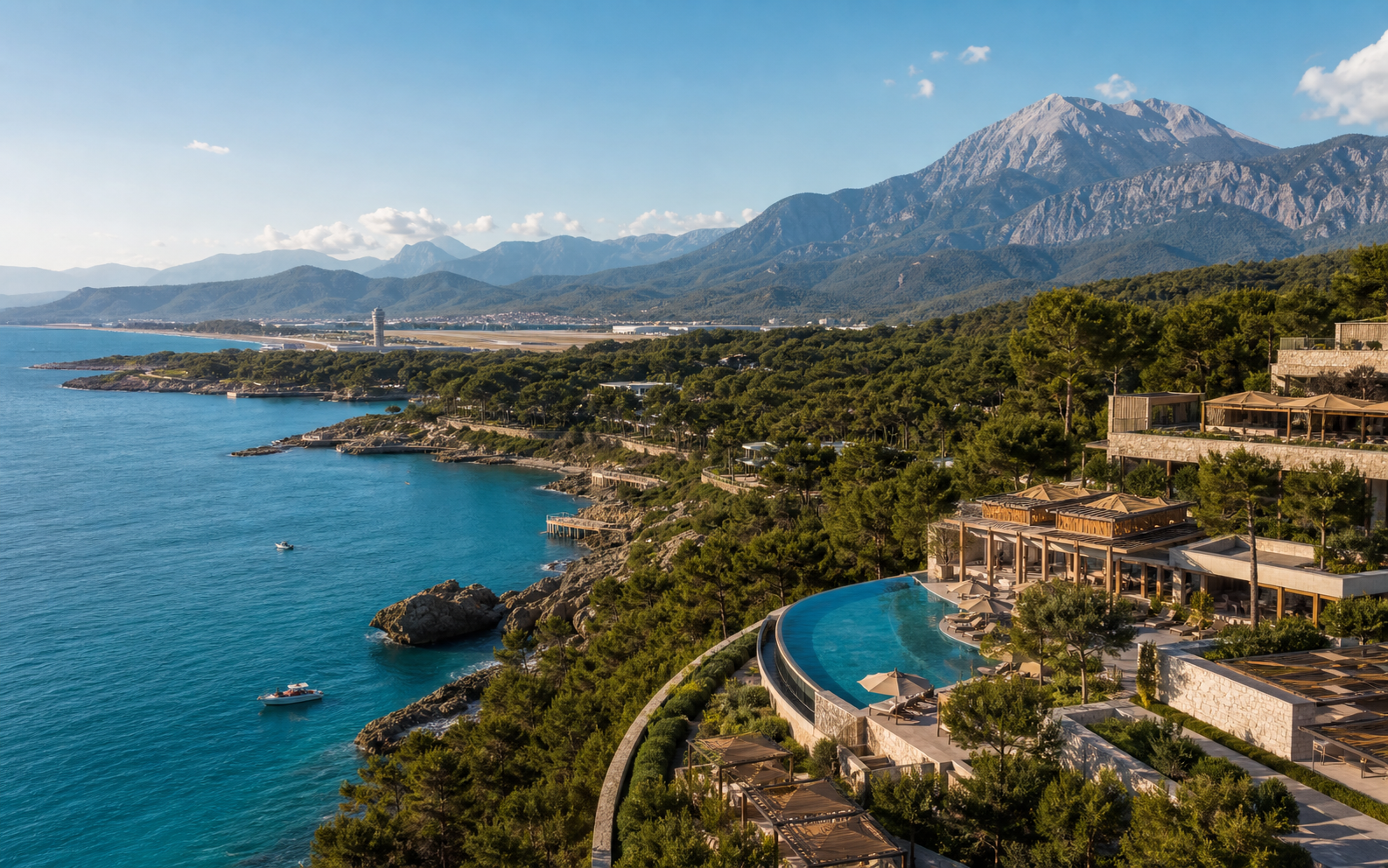
Antalya and the wider Mediterranean corridor remain central to international leisure demand. Their relevance comes from coastal access, established hospitality infrastructure, air connectivity and a mature ecosystem of tourism operators and service providers.
Istanbul has a different profile. It combines cultural tourism, international aviation, business travel, conferences, retail, gastronomy and regional connectivity. Cappadocia, the Aegean, the Black Sea region, winter destinations and historical cities each attract different visitor segments and create different commercial conditions.
This diversity matters for capital allocation. A hospitality investment, a travel technology company, a wellness concept, a medical tourism platform and a premium food-service operator will not evaluate Türkiye through the same criteria. Each must identify the relevant customer profile, demand season, location, operating model and regulatory environment.
The strength of Türkiye is not that every destination offers the same opportunity. It is that the country provides several tourism economies within one national market.
Hospitality is becoming a wider operating platform
The tourism sector is evolving from a basic accommodation model toward a wider hospitality economy.
International visitors increasingly look for complete experiences rather than a simple room booking. This places more value on quality of service, destination identity, food, wellness, culture, digital access, mobility and trust.
For international investors, this creates a wider range of possible entry points. Opportunities may arise in areas such as:
- premium and boutique hospitality operations;
- wellness, spa and health-oriented services;
- travel technology and booking infrastructure;
- tourism mobility and destination transport;
- food, beverage and experiential retail;
- event, conference and incentive travel services;
- property and facility management for operating businesses;
- destination-focused digital platforms and customer-service tools.
The relevant question is not whether tourism is growing in general. It is whether a proposed business solves a real operating need within the tourism ecosystem.
A strong concept should be able to explain who the customer is, why that customer chooses Türkiye, what makes the service differentiated and how the operation can remain viable through changing seasons and market conditions.
Coastal growth should be understood through demand quality
Coastal destinations are highly visible because they combine international leisure demand, climate, hospitality infrastructure and lifestyle appeal. But visibility alone does not create a sustainable investment case.
Serious investors should look at demand quality rather than only headline visitor numbers. This means examining the origin of visitors, average spending, length of stay, seasonality, airline access, local labour availability, infrastructure capacity and the ability of a location to retain demand when travel conditions become more competitive.
A destination with high visitor numbers may still face pressure on prices, operating costs or margins. A smaller destination may have stronger potential when it offers differentiated experiences, better supply discipline or a clearer target customer.
Türkiye’s coastal markets are attractive because they are connected to a wider tourism system. Their value is not limited to scenery. It also depends on airports, service standards, transport, food supply, hotel operations, local business capability and international marketing reach.
This is why international capital should evaluate tourism-related opportunities as operating environments, not simply as locations on a map.
2026: resilience and preparation matter
The first half of 2026 has shown both the strength and the sensitivity of tourism demand.
Visitor arrivals and tourism revenue continued to rise in the first quarter. However, regional uncertainty has also led to more cautious travel decisions, a greater role for late bookings and price pressure in parts of the market.
For investors, this is not merely a tourism issue. It is a reminder that every project should be tested against different scenarios.
A resilient tourism-related business should be able to consider:
- changes in booking windows;
- airline capacity and route continuity;
- seasonal demand variation;
- energy, staffing and operating-cost pressure;
- currency movements;
- regional security perception;
- customer concentration by country or segment;
- the ability to adapt pricing and service delivery.
The objective is not to eliminate uncertainty. It is to structure a business that can operate responsibly within it.
What international investors should consider
Türkiye’s tourism economy offers meaningful potential, but success depends on preparation and market fit.
Before entering the market, international investors should consider:
- which tourism segment they are actually targeting;
- whether the opportunity is hospitality, services, technology, wellness, events, transport or infrastructure;
- the depth and seasonality of demand;
- the location’s air, road and service connectivity;
- licensing, operating and local compliance requirements;
- staffing, supplier and management capability;
- currency, cost and geopolitical sensitivity;
- source-of-funds documentation and banking readiness;
- the commercial credibility of local partners and counterparties.
WT GROUP TURKIYE sees tourism as one of the country’s strongest international bridges. It brings people, spending, services, global visibility and commercial activity into the same market environment.
For international capital, the opportunity is not limited to owning an asset. It lies in understanding where tourism demand creates a durable operating need — and entering Türkiye with a structure that is commercially credible, properly documented and aligned with the intended market.
Sources consulted
- Turkish Statistical Institute — tourism income and visitor data.
- Republic of Türkiye Ministry of Culture and Tourism — visitor and tourism-sector information.
- Turkish airport and aviation statistics.
- Reuters reporting, 2025–2026.