Invest in Türkiye
HIT-30 AND TÜRKİYE’S HIGH-VALUE INVESTMENT AGENDA
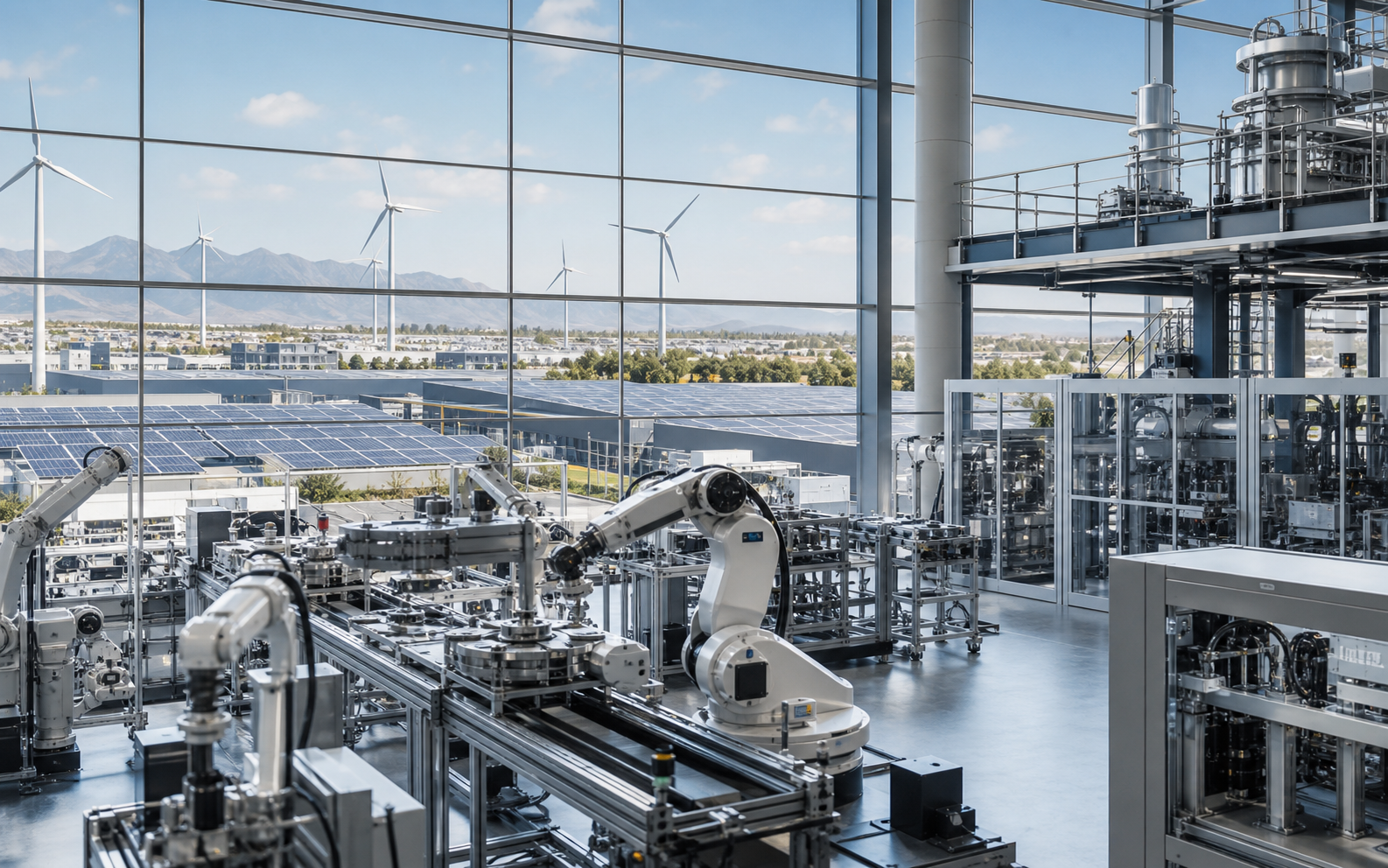
Türkiye’s investment narrative is evolving beyond conventional market-entry models. Alongside tourism, trade and traditional manufacturing, the country is directing greater attention toward advanced production, electrification, energy transition, strategic technologies and export-oriented activity.
For international capital, this matters because the opportunity is not limited to selling into a domestic market. It may also involve locating productive capacity, participating in supply chains, developing specialised services or establishing a regional operating base connected to Europe, the Gulf, Central Asia, North Africa and neighbouring markets.
The HIT-30 investment agenda is part of that wider direction. Its objective is to encourage investment in areas considered strategically important for long-term competitiveness: electric vehicles, battery value chains, semiconductors, solar manufacturing, wind-energy components and other advanced industrial capabilities.
The message for international investors is clear: Türkiye is seeking not only capital, but capital connected to production, technology, employment, exports and operational substance.
A shift from market access to industrial participation
For many years, Türkiye has been recognised as a major manufacturing and trade location. Its industrial base, transport links and proximity to large regional markets have supported activity in automotive, machinery, textiles, food, household goods, construction materials, logistics and a wide range of export industries.
The current investment agenda seeks to build on that base by attracting activities with greater technological intensity and stronger supply-chain value.
This is important for international companies considering where to establish new capacity. A market may be attractive because it has customers. But it becomes more strategic when it can also support production, sourcing, service delivery, technical capability and exports.
Türkiye’s high-value agenda therefore creates a different conversation for investors. Instead of asking only whether there is demand in the country, investors can assess whether Türkiye may support a broader regional business model.
For example, an industrial company may evaluate Türkiye as a manufacturing or component base. A clean-energy business may assess the local supply chain, grid development, permitting environment and equipment demand. A technology company may consider software development, gaming, digital services or regional support operations. A logistics operator may look at how industrial growth, ports, road networks and trade flows create demand for specialist services.
The relevant opportunity depends on the operating model. There is no single “Türkiye strategy.” There are several possible routes, each requiring different capital, expertise, approvals, local execution and risk analysis.
HIT-30: strategic sectors, not automatic benefits
HIT-30 is often described through its headline value: a programme connected to approximately USD 30 billion of announced incentive support for high-technology sectors.
However, the real importance of the programme is not the headline number. It is the policy direction behind it.
Türkiye has identified sectors where it wants to deepen domestic capability and attract international participation. These include electric vehicles, battery production, semiconductor capacity, solar-cell production and critical wind-energy components. The country’s broader energy strategy also involves major planned growth in renewable generation and associated transmission infrastructure.
For investors, these areas may create opportunities across more than one layer of the value chain:
- manufacturing facilities and industrial equipment;
- components and specialised materials;
- engineering, testing and quality-control services;
- maintenance, repair and operational support;
- software, automation and industrial digitalisation;
- logistics and supply-chain coordination;
- energy infrastructure and grid-related capability;
- export services connected to high-value sectors.
Not every activity will qualify for an incentive, and not every investment will be suitable simply because it falls near a priority sector. Eligibility can depend on the legal structure, investment amount, location, operational substance, employment profile, export contribution and regulatory requirements.
The correct starting point is therefore not “what incentive can be claimed?” It is “does this project have a credible operating purpose in Türkiye?”
Energy transition creates a wider investment ecosystem
Türkiye’s renewable-energy ambitions are relevant not only to power producers. They create demand for an extended ecosystem of equipment, engineering, construction, digital monitoring, maintenance, storage, transmission and specialist services.
As renewable capacity expands, the value of supporting infrastructure becomes more visible. Grid connections, transformer capacity, high-voltage systems, equipment supply, performance monitoring, land access, maintenance and project delivery can all become commercially important.
For international businesses, this means that opportunities may exist beyond ownership of energy assets. A company may participate as a supplier, service provider, technology partner, engineering specialist, industrial manufacturer or logistics operator.
At the same time, energy projects require discipline. Land rights, permits, procurement, grid access, financing, currency exposure, equipment sourcing and local operating capability must all be examined carefully. A strategic national agenda can create momentum, but it does not remove project-level risk.
The strongest projects are usually those in which the commercial rationale remains sound even after incentives are treated as secondary support rather than the sole source of value.
High-value services and regional competitiveness
Türkiye’s 2026 competitiveness measures also signal a wider effort to attract export-oriented services and regional activity. Announced and enacted measures have focused on qualifying service exports in areas such as software, gaming and medical tourism, as well as specific industrial-export and financial-centre activities subject to applicable conditions.
For international investors, this reinforces an important point: Türkiye is not presenting itself solely as a location for physical production.
The country is also seeking to strengthen its role in digital services, professional activity, international trade support, tourism services, technical capability and regional business coordination.
This matters particularly for companies that combine physical and digital operations. A manufacturer may need software and engineering support. A tourism business may depend on digital customer acquisition and payment systems. A logistics company may require data, tracking, automation and regional control functions. A technology business may need access to commercial clients, talent and service-export opportunities.
The strongest investment models will often be those that connect several of these layers rather than relying on a single source of revenue or a single local advantage.
What international capital should evaluate
Before entering a high-value sector in Türkiye, an investor should examine:
- the practical commercial purpose of the project;
- the relevant market, customer and export route;
- incentive eligibility and the conditions attached to it;
- licences, technical standards and regulatory approvals;
- industrial location, utilities, logistics and workforce availability;
- local supply-chain capability;
- energy, grid, permitting and infrastructure requirements;
- banking readiness and source-of-funds documentation;
- corporate structure, governance and operational management;
- currency, financing, regional and geopolitical risk.
WT GROUP TURKIYE views Türkiye’s high-value investment agenda as an invitation to build real operating presence, not simply to chase incentives.
The country’s long-term opportunity lies in the interaction between production, exports, energy transition, technology, tourism, logistics and regional market access. For international capital, the key is to identify where that interaction can support a credible business model — and to enter with proper preparation, documentation and independent professional review.
Sources consulted
- Republic of Türkiye investment and industry announcements relating to HIT-30.
- Republic of Türkiye Ministry of Energy and Natural Resources — renewable-energy strategy and capacity targets.
- Republic of Türkiye Ministry of Trade — export and competitiveness information.
- Istanbul Financial Center public framework.
- Reuters reporting, 2024–2026.